
eat like an athlete
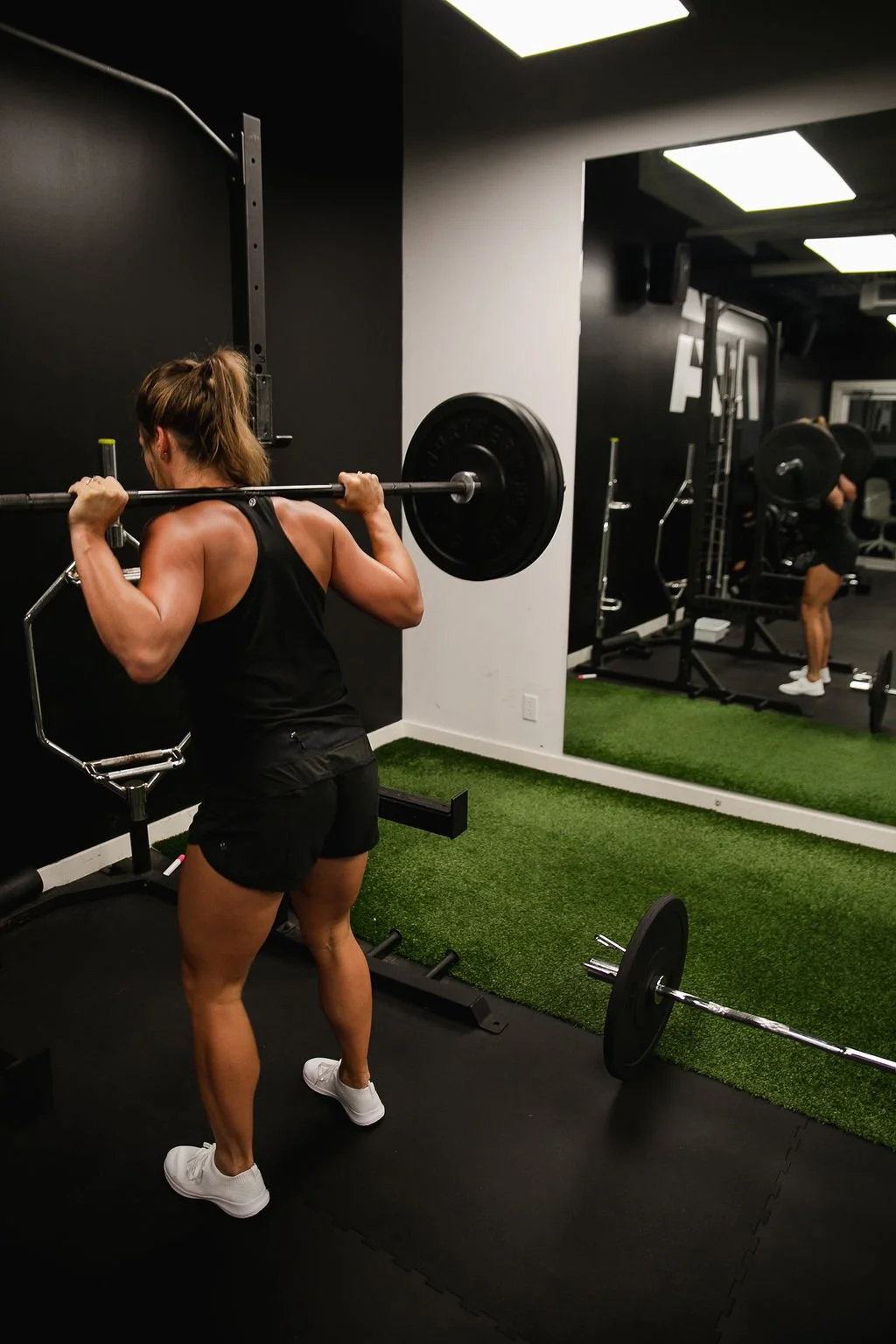
Too many times do I have someone come into my office UNDER-EATING. Lets blame the North American culture, which seems to focus on unrealistic body types rather than actually FEELING good. Not only do restrictive diets and under-eating lead to suboptimal recovery and performance but it also results in fatigue, cravings and binge-eating (no wonder it doesn’t seem maintainable).
Top 10 Tips
Include protein with every meal, aiming for a total of 1g per lb of bodyweight per day or 20-40g of protein per meal.
Focus on protein and carbs close to workouts (within 1-2 hours) and fats and fibres away from workouts (2+ hours).
Hydrate - Aim to drink about 1 litre per 50lbs of bodyweight per day. For example, I weigh about 145lbs so I aim to drink 3L per day. This includes a glass of lemon water to start my day, a bottle of water or tea at work, a bottle of BCAA’s during/around my workout, and a vitamin C + magnesium drink in the evening. I like variety haha.
Earn your carbs - It’s best to eat your carbohydrates around your workouts when they are quickly utilized and your metabolism is revving. We don’t need carbs (aka. “quick” energy) to sit on the couch and watch TV.
Eat your veggies (just not around workouts) - Vegetables consist of numerous antioxidants and anti-inflammatory agents. In fact, each colour is correlated with a different antioxidant (e.g., purple = flavonoids, orange = carotenoids). We need these to repair. Eat your veggies.
Simple carbs are best around workouts while complex carbs are best away from workouts.
Calculating Intake
I am a 5’5” female currently interested in walking my dog, hiking, going for slow jogs, restorative yoga classes and hitting the gym 2-3x per week. As you will see, my daily caloric intake sits around 1995 calories per day. So if you are a 5’9” competitive athlete eating less than me, we have a problem. Let's find out how many calories you actually need.
Step 1: Calculate Basal Metabolic Rate (BMR).
This number represents how much energy (in the form of calories) your body needs to sustain the most basic life-sustaining functions such as breathing, circulation and cell turnover. If you were to do nothing, not even eat or get out of bed, this is how many calories you would need to keep you alive.
Men: BMR = 66.5 + (13.75 x weight (kg)) + (5 x height (cm)) - (6.76 x age (yrs))
Women: BMR = 665 + (9.56 x weight (kg)) + (1.85 x height (cm)) - (4.68 x age (yrs))
E.g., My personal BMR = 665 + (9.56 x 65kg) + (1.85 x 165cm) - (4.68 x 30yrs) = 665 + 621.4 + 305.25 - 140.4 = 1451.25 cal
Step 2: Factor in Activity.
Now you have to account for the energy you expend throughout the day (e.g., getting out of bed, eating (yes, it takes energy to digest your food), working, taking the dog for a walk, exercising). Choose the following based on your current activity level:
1.2 - Sedentary (desk job, exercise rarely)
1.375 - Light (moderate intensity exercise 3x/week)
E.g., 1451.25 x 1.375 = 1995 calories per day
1.55 - Moderate (high intensity exercise or long endurance training 4-5x/week)
1.725 - Very (high intensity exercise 6x/week or multiple doubles)
1.9 - Extreme (professional athletes)
Step 3: Consider Body Type.
Ectomorph (I Type) - 55% carbs, 25% protein, 20% fat
Mesomorph (V Type) - 40% carbs, 35% protein, 30% fat
Endomorph (O Type) - 25% carbs, 35% protein, 40% fat … this would be the body-type I fall into
Step 4: Convert Calories (cal) to Macronutrients in Grams (g).
E.g., Carbohydrates and protein provide 4cal/g. Fat provides 9cal/g. Thus, each day I should be consuming about:
124 grams of carbohydrates
174 grams of protein
89 grams of fat
Meal Timing
It takes our body time to digest so if you want to utilize the energy you eat during your workout (instead of puking it up) consider proper nutrient timing. I like to think of “sandwiching” your workouts with protein and carbs.
Pre-workout: Ideally, we want to eat a well-balanced meal 3-4 hours before exercise and a snack 1 hour before exercise. The meal should be high in carbohydrates (150-200g or 1-1.5g/kg bodyweight), moderate in protein, and low in fat and fibre. The snack should be easily digestible and mainly made of 0.3-0.8g.kg bodyweight carbohydrates and 10-15g protein (e.g., protein shake with oats or banana). If you workout first thing upon waking consider waking earlier to eat (haha) or pre-loading the night before.
Post-workout: Protein and carbs are most readily absorbed while fats and fibre can slow down absorption. Post-pump we want our muscles to absorb nutrients sooner than later, so a 1:4 protein:carb ratio is optimal, ideally within 90-minutes. If you tend to eat dinner or breakfast at this time it’s fine to have fibre and fats but just ensure you’re getting adequate protein and carbs as well. Post-workout protein can result in better muscle recovery, less soreness, increased ability to lift more then next day and thus increased gains. Get your protein (or don’t, your choice). Waiting for longer than 2 hours after a training session can delay metabolism and lead to increased inflammation, muscle soreness and damage. 4-6 hours after workout have snacks 1:1 ratio protein:carb 100-200kcal total or low protein snack before bed 20g protein and minimal fat + carb.
Endurance Athletes
Carbs 2+ hours away or just before the event/race. Avoid carbs 1-1.5 hours before the race because this is when the blood sugar drop can occur.
Caffeine intake can be beneficial prior to an event, but in order to gain this benefit one must decrease intake/load in the weeks before.
Eat fats many hours away from an event (it slows down the absorption of the fuel that is quickly being utilized).
Refuel with proteins and carbs (not fat) in the 45-minute window post-workout